
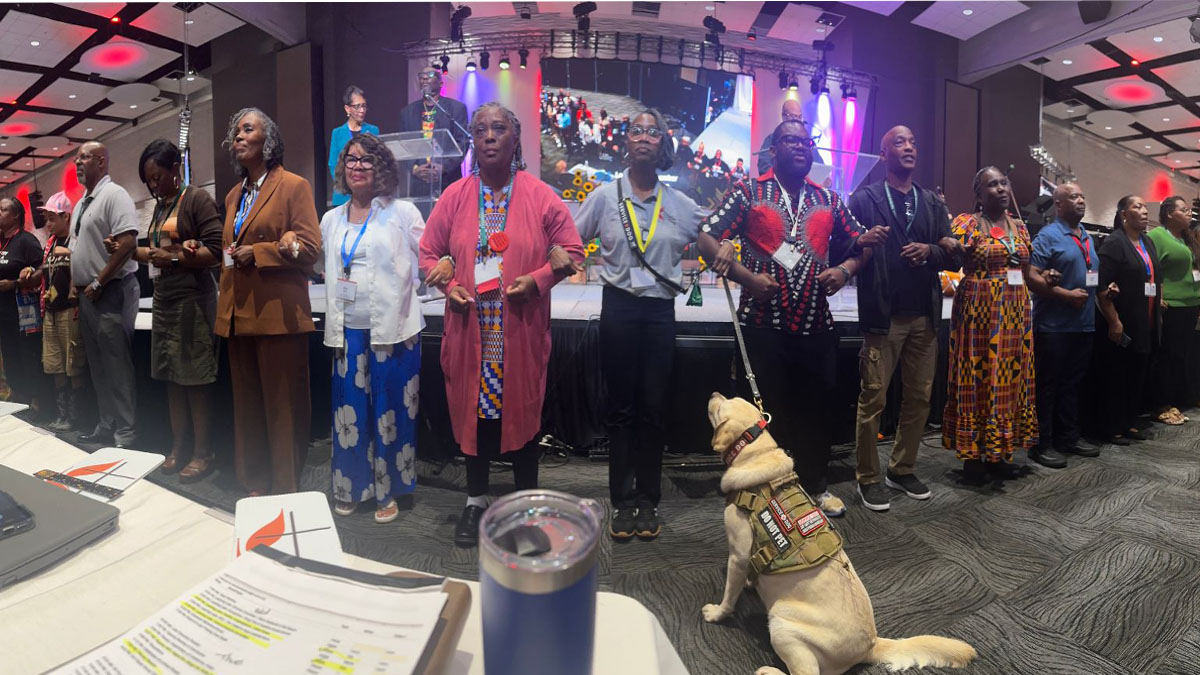
Sitting on the front row of the assembly hall with a direct line of sight to Bishop Connie Shelton, my brain struggled with how to write an article without looking like I wasn’t paying attention. Suddenly, I was in fifth grade, and my teacher’s gaze was on my participation in class. In my mind, at any moment she would pause speaking… look down directly at me seated right in front of her… and smile as she said, “Kim dear… is that a note you are passing? Are you paying attention?”
For the first time, I had the privilege of volunteering with the communications team to help tell the story of this annual worship experience in real time. The trip behind those curtains was worth the work. Over the years, I have wondered what went on back there and how they managed the phenomenal task of constant and meaningful communication throughout the week. Most of us, as participants, just take it for granted.
In most of my writing, I am wired to notice the details that bring people into a moment. What the room felt like… What memories, sounds, or smells brought to the surface… or what emotions surfaced as things like red shoes, pom poms, or even boas… made us laugh or cry. This assignment called for paying attention to, or trying to pay attention to, key phrases, details, and names. More than once, my emotions made me want to know so much more.
My heart wanted to hear the stories behind the tears during the Lumbee Tribe Recognition celebration. It wanted to know the stories behind the contrast of the female clergy who came forward to rejoice in 140 years of women being ordained and the black clergy who came forward during the Juneteenth ceremony. There was a striking contrast in emotion, and I wanted to know what tales those multitude of tears were carrying as they quietly fell and disappeared into the carpet below… I wanted to know… “WHY?” I got lost at times.
In those moments, my District Superintendent, sitting beside me, became my backup reporter on scene. I give thanks for her and for the record button on my phone, as well as a laptop that helped me mask the annoying clicking of my nails as I tried to capture the moments while making eye contact, just in case the bishop looked my way.
My takeaway is that this team is incredibly dedicated and talented! Behind those curtains are photographers, videographers, tech crews, editors, and writers bringing this experience to the world, really, as it unfolds. Truthfully, I expected more of them. The work they do and the stories they share through images and articles help tell the world who we are and how we love each other and our neighbors. Telling that story is important work.
The NCCUMC Communications team made me wonder: how are we, as individuals, as congregations, as districts… telling our stories?
Kim